March 9, 2026
Modern vs. Garden vs. Whimsical Bouquets: Which Style Is Right for You?
Compare three popular wedding bouquet styles — Modern, Garden, and Whimsical — to find the perfect match for your venue, dress, and personality.
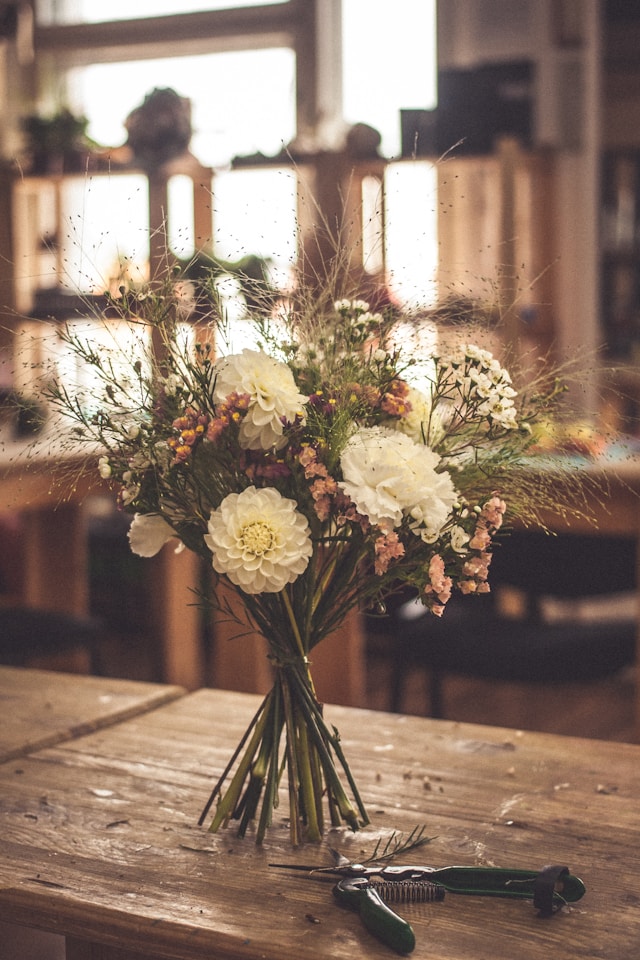
Choosing a wedding bouquet style is one of those decisions that seems simple until you start scrolling through thousands of options online. The good news is that most bridal bouquets fall into one of three broad categories: Modern, Garden, and Whimsical. Understanding the differences between them will help you make a confident choice without second-guessing yourself all the way to the altar.
At Wedding Box Florals, these are the three styles we design around. Here is an honest breakdown of each one so you can figure out which fits your wedding.
What Does a Modern Wedding Bouquet Look Like?
A Modern bouquet is defined by structure and restraint. Think clean lines, a tight silhouette, and a limited color palette. These bouquets are intentionally curated — every stem has a purpose, and there is no "wildness" to the arrangement.
Key characteristics:
- Shape: Compact and round, or a sleek, elongated form. The outline is crisp and deliberate.
- Color palette: Typically monochromatic or two-tone. White and green is a classic Modern pairing. Blush and burgundy is another popular option.
- Flowers commonly used: Roses, calla lilies, orchids, ranunculus, tulips. These blooms have smooth, uniform petals that contribute to the polished look.
- Greenery: Minimal and controlled. You might see a few eucalyptus leaves or ruscus tucked in, but greenery never overwhelms the flowers.
- Stems: Often wrapped tightly in satin ribbon with clean, finished edges.
Best suited for:
- City weddings, rooftop receptions, museum venues, modern hotel ballrooms
- Minimalist or structured wedding dresses — think crepe sheaths, column gowns, sleek satin
- Brides who gravitate toward "less is more" aesthetics
- Black-tie or formal wedding dress codes
A Modern bouquet photographs like a design object. It is striking in its simplicity, and it will not compete with a dramatic venue or an architectural dress.
What Does a Garden Wedding Bouquet Look Like?
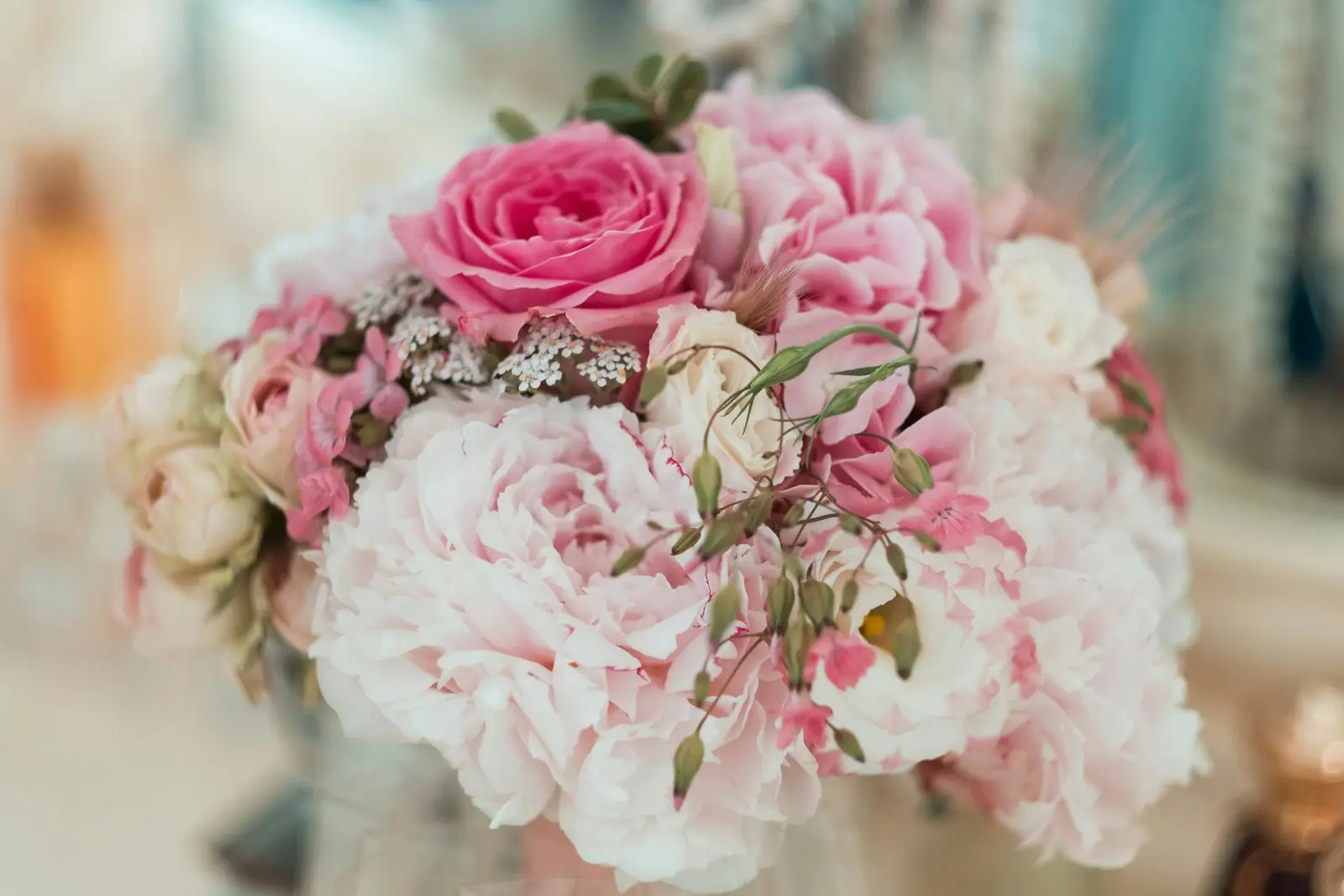
A Garden bouquet is what most people picture when they think of wedding flowers. It is full, lush, and romantic. The arrangement looks like it could have been gathered from an English garden — abundant and natural, but still intentionally designed.
Key characteristics:
- Shape: Rounded but slightly loose. The silhouette is softer than a Modern bouquet, with some blooms extending beyond the main form.
- Color palette: Usually two to four complementary colors. Blush, cream, soft peach, and sage green is a quintessential Garden palette.
- Flowers commonly used: Garden roses, peonies, ranunculus, lisianthus, dahlias, spray roses, stock. A mix of large focal flowers and smaller supporting blooms.
- Greenery: Generous. Eucalyptus, Italian ruscus, ferns, and dusty miller are common. The greenery fills gaps and creates a sense of abundance.
- Stems: Wrapped in ribbon but not overly structured. Sometimes finished with a trailing ribbon or lace.
Best suited for:
- Outdoor weddings, garden venues, estates, vineyards, barns with a romantic feel
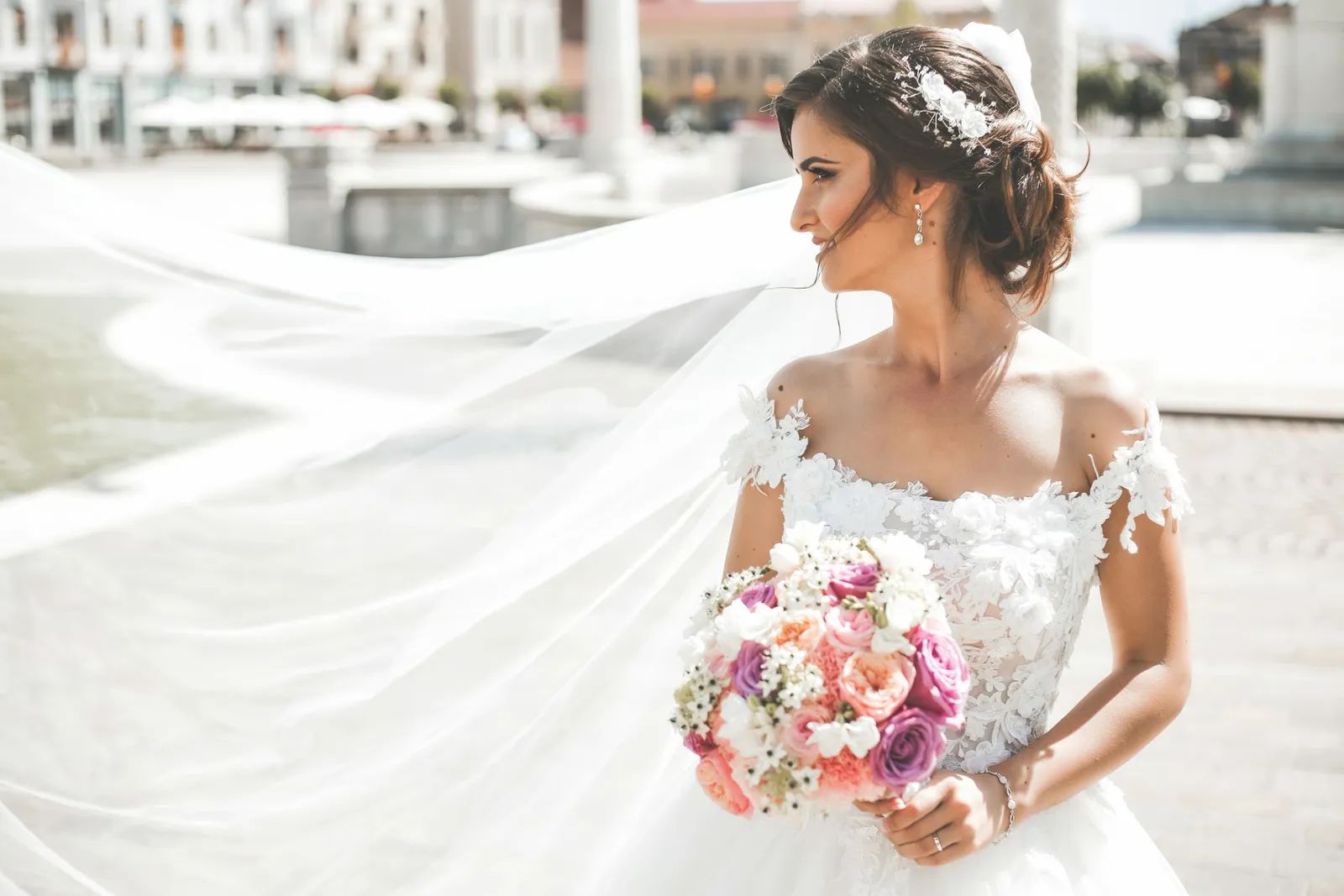
- Classic and romantic wedding dresses — A-line gowns, ball gowns, lace details
- Brides who love a full, abundant floral look
- Semi-formal to formal wedding settings
Garden bouquets are universally flattering in photos. Their fullness adds visual weight to the bridal look, and the mix of textures gives photographers plenty to work with.
What Does a Whimsical Wedding Bouquet Look Like?
A Whimsical bouquet breaks the rules — intentionally. It is asymmetric, textural, and often includes unexpected elements. If Modern is "edited" and Garden is "abundant," Whimsical is "expressive."
Key characteristics:
- Shape: Asymmetric or cascading. Stems might extend in different directions. The outline is deliberately imperfect.
- Color palette: Can range from muted earth tones to bold, saturated hues. This style handles unusual color combinations well — terracotta and mauve, or sage and dusty blue.
- Flowers commonly used: Protea, thistle, anemones, wildflowers, dried elements (bunny tails, dried grasses), unusual greenery. Stems you would not see in a traditional arrangement.
- Greenery: Often dramatic. Trailing vines, olive branches, or unusual foliage like monstera leaves.
- Stems: Sometimes left partially exposed or wrapped in raw linen, twine, or fabric that matches the unconventional feel.
Best suited for:
- Bohemian weddings, art gallery venues, desert celebrations, intimate elopements
- Non-traditional wedding dresses — jumpsuits, colored gowns, two-piece outfits, unique silhouettes
- Brides with a strong personal aesthetic who want their flowers to feel like a statement
- Casual to semi-formal wedding settings
Whimsical bouquets are conversation starters. They tell guests something about the bride's personality before she even reaches the end of the aisle.
How Do You Choose Between the Three Styles?
If you are stuck, here is a simple framework:
Start with your venue. The setting does a lot of the work. A loft with exposed brick? Modern. A garden with stone paths? Garden. A beach with driftwood? Whimsical. Match the energy of the space.
Look at your dress. Your bouquet and dress are in every single portrait. They need to complement each other. A heavily detailed, traditional lace gown needs a bouquet that does not compete with it — Garden works well. A clean, simple dress can be elevated by a striking Modern bouquet. An unconventional dress calls for an unconventional bouquet.
Consider your wedding palette. If you are working with a strict two-color palette, Modern handles that beautifully. If your palette is more of a "mood" with several complementary tones, Garden is forgiving. If your palette is eclectic or includes unusual colors, Whimsical is built for that.
Trust your instinct. When you look at photos of each style, one will feel right. That feeling is more reliable than any style guide, including this one.
Can You Mix Elements from Different Bouquet Styles?
You can, but do it carefully. The most common and successful hybrid is a Garden bouquet with Modern color restraint — lush and full, but in a strict two-color palette. This gives you the abundance of Garden with the polish of Modern.
Another workable combination is Garden shape with Whimsical flower choices — a round, full silhouette but with unexpected blooms like protea or anemones mixed in.
What tends to look confused is trying to be all three at once. If you want structure, texture, and abundance in the same bouquet, the design can lose its identity. Pick a primary style and borrow one element from another.
Do Bridesmaid Bouquets Need to Match the Bridal Bouquet Style?
They should be in the same style family, but they do not need to be identical. In fact, slightly simplified versions of the bridal bouquet often look better for bridesmaids. This creates visual hierarchy — the bride's bouquet stands out as the most elaborate, while the bridesmaids' bouquets coordinate without competing.
A common approach: use the same style and color palette, but reduce the size by about 30% and use fewer premium focal flowers. The overall effect is cohesive and intentional.
How Do You See What Each Style Looks Like with Your Colors?
This is exactly what our bouquet customizer is designed for. You can toggle between Modern, Garden, and Whimsical, choose your primary and secondary colors, and see how each combination looks before you commit. It takes about two minutes and saves you from hours of Pinterest spiraling.
If you are still narrowing down your color options, our guide on how to choose wedding flower colors will help you build a palette that works with your venue, dress, and season. And if you want to understand what flowers are available for your wedding date, check out our seasonal flower guide.
Every bride has a bouquet style that feels like hers. The goal is not to follow a trend — it is to carry something that makes you feel exactly like yourself on your wedding day. Learn more about how we design each style on our about page.