May 3, 2026
Bridal Bouquet Cost in 2026: How Much You'll Actually Pay (and Why)
The average bridal bouquet costs $280 in 2026 — but yours could be $80 or $900. See real pricing by style, size, florist type, and where the markups hide.
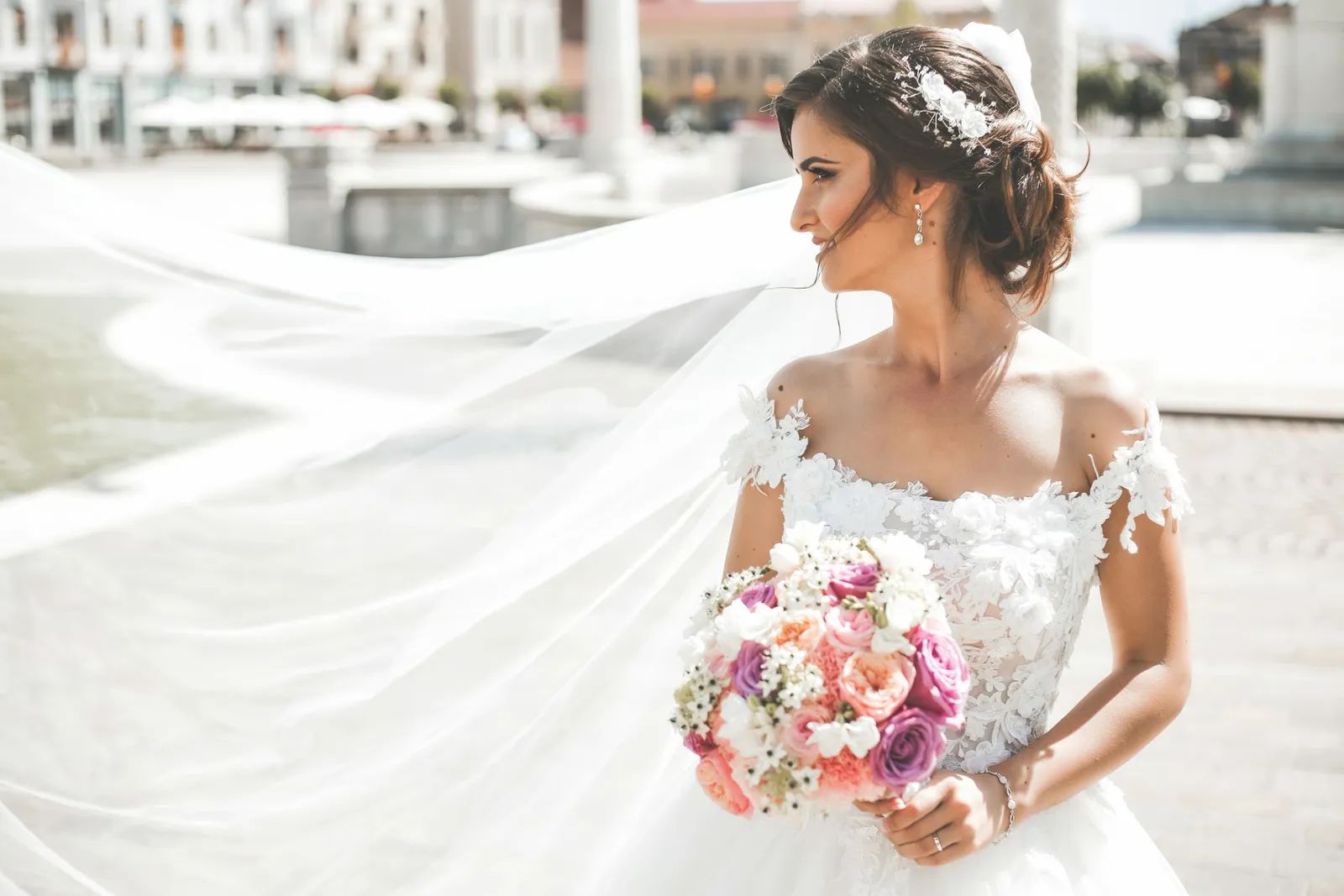
The average cost of a bridal bouquet from a US florist in 2026 is $280. The real range, though, runs from about $80 to over $900 — and the same arrangement can swing by hundreds of dollars depending on where you live, what month you're getting married, and which florist you ask.
If you've gotten a quote that surprised you, this guide will tell you why. We break down what bridal bouquets actually cost across every variable that drives the price: style, size, region, flower choice, and service model. By the end, you'll know whether your quote is fair, what you're really paying for, and where the easiest savings are.
For a concrete reference point as you read: a hand-assembled bridal bouquet from Wedding Box Florals starts at $159.99 in Standard size, with Large adding $40 and Oversized adding $80. That's roughly half the $280 national average, before you customize style, color, or greenery — and every bouquet ships fully assembled to your door.
How Much Does a Bridal Bouquet Cost in 2026?
The 2026 averages, based on aggregated US florist pricing:
- National average: $280
- Median local florist: $250 to $350
- Luxury florist: $450 to $900+
- Online pre-assembled service: $100 to $250
- DIY from wholesale flowers: $40 to $120 in raw materials
A few things stand out. First, "average" is doing a lot of work — most brides are quoted between $200 and $500, but a meaningful chunk pay over $700, and that pulls the average up. Second, the gap between a local florist and an online pre-assembled service is consistently 50–70%. That's not a quality gap — it's an overhead gap.
How Much Does a Bridal Bouquet Cost by Style?
Bouquet style is one of the biggest price drivers because it dictates how many stems you use, what kind of stems, and how much design labor goes into the arrangement.
Modern / minimalist bouquets — $150 to $400. These use fewer stems (typically 12 to 20), tighter palettes, and simpler shapes. Less material and less assembly time means lower cost.
Garden-style bouquets — $250 to $550. Loose, romantic arrangements with mixed textures and trailing greenery. They use more stems (25 to 40), more variety, and more design time. Most full-service florists default to this style.
Whimsical / wildflower bouquets — $200 to $500. Heavy on texture, asymmetry, and unexpected blooms. Stem count is moderate but flower variety is high, and finding specific specialty blooms can drive cost up.
Cascading / waterfall bouquets — $400 to $900. The most expensive style by a wide margin. They use the most stems (often 50+), require structural mechanics, and take the most labor to assemble. Almost no online services offer them at scale.
For a deeper dive on which style suits your wedding, see our Modern vs. Garden vs. Whimsical bouquet comparison.
How Much Does a Bridal Bouquet Cost by Size?
Stem count is the most direct cost lever in any bouquet.
| Size | Diameter | Stem count | Local florist price |
|---|---|---|---|
| Petite | 7–9 inches | 12–18 | $150–$275 |
| Standard | 10–12 inches | 20–30 | $250–$450 |
| Oversized | 13–16 inches | 35–50 | $400–$700 |
| Cascading | 12–14 inches + trail | 50+ | $500–$900 |
Most brides default to "standard" without realizing they have a choice. If you're petite, a smaller bouquet often photographs better and saves $100 to $200. If your dress is dramatic, oversized makes sense — but go in knowing it's a real upgrade in cost.
How Much Does a Bridal Bouquet Cost by Region?
Geography matters more than most brides expect. The same bouquet quoted from a florist in Manhattan versus a florist in Tulsa can differ by 60% — and it's not because the Manhattan florist is better, it's because their rent is six times higher.
High-cost markets (NYC, San Francisco, LA, Boston, DC, Seattle) — expect 25–40% above national average. Median bridal bouquet: $350 to $550.
Mid-cost markets (Chicago, Denver, Atlanta, Austin, Portland, Minneapolis) — close to national average. Median: $250 to $400.
Lower-cost markets (most of the South, Midwest, mountain states, smaller metros) — 15–25% below national average. Median: $180 to $300.
Destination wedding locations (Charleston, Napa, Aspen, Big Sur, Hawaii) — often 50–100% above national average. Florists in destination markets quote at "wedding tax" rates because they know couples are flying in and have less leverage.
This is one of the strongest arguments for ordering wedding flowers online: a pre-assembled bouquet ships at the same price whether your wedding is in Manhattan or rural Wyoming. You opt out of geographic markups entirely.
How Much Does the Flower Choice Affect the Price?
The specific flowers in your bouquet can swing the cost by 3x or more.
Budget-friendly stems ($1–$3 per stem wholesale): standard roses, carnations, alstroemeria, baby's breath, mums, eucalyptus, ranunculus.
Mid-range stems ($3–$6 per stem): garden roses, hydrangeas, lisianthus, anemones, dahlias, stock.
Premium stems ($6–$15+ per stem): peonies (in season), Juliet garden roses, protea, orchids, cafe au lait dahlias, lily of the valley.
A 25-stem bouquet built around standard roses might cost a florist $35 in materials and quote at $250. The same bouquet built around peonies might cost $180 in materials and quote at $550. The retail markup is similar, but the materials cost is dramatically different.
If you love a specific premium flower but can't justify the cost, ask your florist (or designer) for a "feature flower" approach — three to five peonies as the focal point, surrounded by less expensive supporting blooms. You get the look at a fraction of the price.
For a guide to which flowers are most affordable in each season, see what flowers are in season for your wedding.
Why Is There Such a Wide Price Range?
The same bouquet can be quoted at $200 by one florist and $600 by another. Here's where the difference actually goes:
Materials (15–25% of the price). The flowers, greenery, ribbon, and tape. Often the smallest line item, despite being the visible product.
Labor (25–40%). Conditioning the flowers, designing, assembling, packaging. A hand-tied bouquet takes 30 to 60 minutes of skilled time.
Overhead (25–35%). Studio rent, refrigeration, insurance, vehicles, software, supplies, utilities. This is the line item that varies most by location and is the entire reason florists in expensive cities charge more.
Profit margin and consultation time (10–20%). Most wedding florists do one or two consultations per couple, plus mood boards and revision rounds. That's billable time even when it's bundled into the bouquet quote.
When you order from an online pre-assembled service, you cut the overhead and consultation lines almost entirely. That's where the 50–70% savings come from — not from cheaper flowers or worse design, but from a leaner business model.
Are Expensive Bridal Bouquets Worth It?
Sometimes. A talented florist with a strong design vision creates work that a $200 bouquet won't match — particularly for cascading styles, very large arrangements, or unusual color stories. If floral design is one of the things you most want to spend on, a luxury florist can absolutely deliver something extraordinary.
For most couples, though, the difference between a $250 bouquet and a $500 bouquet is not double the beauty. It's a similar bouquet with more overhead built into the price. And the difference between a $500 florist bouquet and a $200 pre-assembled bouquet from a quality online service is often invisible in photos.
If you're price-shopping bouquets right now, the smartest move is to get a real comparison: a quote from one local florist, plus a customized order from an online pre-assembled service. Compare them side by side on price, design, and what you actually receive.
For more on the tradeoffs, read our bridal bouquet box vs. local florist comparison.
How Can You Lower the Cost of Your Bridal Bouquet?
The five highest-leverage moves, ranked:
- Switch from a full-service florist to an online pre-assembled service. This single decision typically cuts your bouquet cost by 50–70%.
- Choose in-season flowers. Saves 30–60% on materials with no design compromise.
- Pick standard size over oversized. A 10-inch bouquet photographs as well as a 14-inch one for most body types.
- Use feature flowers, not full bouquets of premium blooms. Five peonies costs less than 25 peonies.
- Tighten the color palette. Fewer colors means fewer stem varieties to source.
For a full breakdown across every floral piece, see our complete wedding flower cost guide and budget wedding bouquet guide. If you're also pricing bouquets for your bridal party, our average cost of a bridesmaid bouquet guide covers the per-bouquet math and what a full party actually costs.
What Should You Actually Pay for Your Bouquet?
If you're standing in front of a florist quote right now and trying to decide if it's reasonable, here's the rule of thumb: a fair, mid-range florist in a mid-cost market should quote you between $250 and $400 for a standard 10–12 inch bouquet of in-season flowers. Anything above $500 is either a luxury florist, a destination market, or a premium-flower bouquet — make sure you're getting one of those three things.
And if the price still feels high regardless of what category it falls into, you have options. Design your bouquet in our customizer and you'll see your exact total in under five minutes — no consultation, no quote, no surprises. Most brides are surprised at how little a beautifully designed, hand-assembled bouquet actually has to cost.
Frequently Asked Questions
How much does a bridal bouquet cost in 2026?
The average bridal bouquet in 2026 costs $280, with most brides paying between $200 and $500. The full range runs from about $80 for a simple online pre-assembled bouquet to over $900 for a luxury florist cascading arrangement. Style, size, region, and flower choice are the four biggest cost drivers.
What is the average cost of a bridal bouquet from a florist?
A mid-range local florist charges $250 to $400 for a standard 10–12 inch bridal bouquet of in-season flowers. Luxury florists charge $450 to $900 or more. Online pre-assembled services run $100 to $250 for the same size — a 50–70% reduction driven almost entirely by lower overhead, not lower quality.
Why are bridal bouquets so expensive?
Materials — the flowers themselves — account for only 15–25% of a bridal bouquet's price. The rest is labor (25–40%), overhead like studio rent and refrigeration (25–35%), and consultation time and profit margin (10–20%). That's why the same arrangement quoted in Manhattan can cost 60% more than the same arrangement in Tulsa: the overhead line item is dramatically different.
How much should I spend on a bridal bouquet?
For a mid-cost market and a mid-range florist, a fair price for a standard 10–12 inch bridal bouquet of in-season flowers is $250 to $400. Anything above $500 should come with a clear reason: a luxury florist, a destination wedding market, or premium flowers like peonies or garden roses.
How can I get a cheaper bridal bouquet?
The single biggest cost-saver is switching from a full-service florist to an online pre-assembled service — typically a 50–70% reduction. After that, choosing in-season flowers (30–60% materials savings), picking standard size over oversized, using premium blooms as accents instead of fillers, and tightening your color palette will each shave another 10–30% off the total.
Does the type of flower change the bridal bouquet cost?
Significantly. A 25-stem bouquet of standard roses might cost a florist $35 in materials and quote at $250. The same bouquet built around peonies might cost $180 in materials and quote at $550. Premium stems like peonies, Juliet garden roses, protea, and orchids cost 4–10x more than budget stems like standard roses, carnations, and alstroemeria.
Is it cheaper to order a bridal bouquet online?
Yes — typically 50–70% cheaper than the same-size, same-style bouquet from a full-service local florist. The savings come from the leaner service model (no consultation, no revision rounds, no on-site setup), not from cheaper flowers or worse design. A $159.99 pre-assembled standard bridal bouquet is roughly half the $280 national florist average.