January 11, 2026
What to Do with Your Bouquet After the Wedding
Don't let your wedding bouquet wilt and die. Learn how to preserve your bridal flowers through pressing, drying, resin, and other creative options.
You spent weeks choosing the perfect bouquet. It matched your palette, complemented your dress, and looked stunning in every photograph. And then the wedding ended, and it sat in a vase in your hotel room slowly wilting.
Most brides do not think about what happens to their bouquet after the last dance. But with a little planning, you can turn those flowers into a keepsake that lasts decades. Here are the best options, from low-effort to full preservation, plus honest advice on what works and what ends up in a drawer.
How Do You Dry Your Wedding Bouquet?
Air drying is the simplest and most affordable preservation method. It requires no special equipment and works well for most flower types.
How to do it:
- Remove any wet wrapping or water source as soon as possible after the reception. The sooner you start, the better the results.
- Separate the bouquet into smaller clusters of 3 to 5 stems. Large bunches dry unevenly and can develop mold in the center.
- Tie each cluster with string or a rubber band and hang them upside down in a warm, dry, dark space. A closet, attic, or unused room works well.
- Allow 2 to 3 weeks for complete drying. Do not check obsessively — handling partially dried flowers damages them.
- Once fully dry, spray lightly with unscented hairspray to add rigidity and reduce petal shedding.
Best flowers for air drying: Roses, lavender, baby's breath, hydrangeas, statice, and most greenery. These hold their shape well when dried.
Flowers that do not air dry well: Peonies (they collapse), tulips (they shrivel), and orchids (they become papery and lose all dimension). For these blooms, consider pressing or resin instead.
What to do with dried flowers: Display them in a glass dome or shadow box, arrange them in a vase as a permanent display, or incorporate them into a wreath.
How Do You Press Wedding Flowers?
Pressing flowers preserves their color better than drying and creates flat, delicate specimens that can be framed, placed in a scrapbook, or used in resin art.
How to do it:
- Start within 24 hours of the wedding for best color preservation. If you cannot press immediately, store flowers in the refrigerator.
- Disassemble blooms that are too thick to press whole. Gently pull apart roses and garden roses into individual petals. Flatten multi-layered flowers by removing some inner petals.
- Place flowers between sheets of parchment paper, then between the pages of a heavy book. Alternatively, use a dedicated flower press.
- Stack additional books or weights on top. More pressure equals flatter, more even results.
- Change the parchment paper after 3 to 4 days (it absorbs moisture). Replace with fresh parchment.
- Allow 3 to 4 weeks for complete pressing.
Best flowers for pressing: Single-petal flowers (anemones, cosmos), flat flowers (daisies), and individual rose petals. Ferns and flat greenery press beautifully.
Pro tip: Press more than you think you need. Some petals will tear or discolor during the process. Having extras means you can select the best specimens for your final display.
What to do with pressed flowers: Frame them in a floating glass frame, create a piece of wall art, include them in your wedding album, or send them to an artist who specializes in pressed flower designs.
How Does Resin Preservation Work?
Resin preservation encases your flowers (or petals) in clear epoxy resin, creating a solid, glass-like keepsake. This is the most durable preservation method and can produce stunning results, but it requires skill or a professional.
DIY resin preservation: Possible but challenging. Resin requires precise mixing ratios, specific curing conditions, and experience handling flowers in liquid medium. Flowers can float, shift, or release air bubbles that cloud the resin. If you have never worked with resin before, your wedding bouquet is not the time to learn.
Professional resin preservation: A growing industry of artists specializes in preserving wedding flowers in resin. Common formats include coasters, bookends, jewelry boxes, ornaments, and decorative blocks. Expect to pay $150 to $500+ depending on the piece, and allow 4 to 12 weeks for completion.
Important: You need to get your flowers to the resin artist quickly — within 24 to 48 hours of the wedding. Contact your chosen artist before the wedding to arrange timing and hand-off.
Can You Freeze-Dry Your Wedding Bouquet?
Freeze-drying is the gold standard of flower preservation. It maintains the flower's original shape, color, and dimension better than any other method. The process involves freezing the flowers and then slowly removing moisture through sublimation (the ice converts directly to vapor without passing through a liquid phase).
The catch: You cannot do this at home. It requires specialized equipment that costs thousands of dollars. You will need to find a professional freeze-dry preservation service.
What to expect:
- Cost: $200 to $600 for a bridal bouquet
- Timeline: 4 to 6 months (the process is slow by design)
- Results: Flowers that look nearly identical to the day they were fresh, preserved in a display case or dome
Planning ahead: If freeze-drying interests you, identify your preservation service before the wedding and coordinate hand-off timing. Many services will provide a shipping kit so a family member can send your bouquet to them the day after the wedding.
What Are Some Creative Ways to Use Preserved Wedding Flowers?
Beyond simple display, preserved wedding flowers can become:
- Jewelry. Artists can set pressed petals or tiny dried blooms in resin pendants, earrings, or rings. A piece of your bouquet becomes something you wear on anniversaries.
- Ornaments. Dried flowers sealed inside clear glass ornaments make a meaningful addition to your holiday traditions. Add one from your bouquet to the tree each year.
- Stationery. Pressed flowers can be scanned and printed onto thank-you cards, anniversary cards, or custom stationery.
- Scented sachets. Dried petals, especially from fragrant blooms like roses and lavender, can fill small sachets for your dresser or closet.
- Shadow box art. Combine dried flowers with other wedding keepsakes — your invitation, a photo, a piece of ribbon — in a shadow box frame.
- Paperweights. Small resin blocks with embedded flowers make beautiful desk accessories and daily reminders.
When Should You Plan Your Bouquet Preservation?
The most important thing to know about flower preservation is that timing matters. Every method works best when you start with fresh flowers. Here is your timeline:
Before the wedding:
- Decide on your preservation method
- If using a professional service (resin artist, freeze-dry company), book them and confirm hand-off logistics
- Designate a person (bridesmaid, family member, wedding coordinator) to handle the bouquet at the end of the reception
- If DIY pressing or drying, have your supplies ready at home
During the reception:
- Keep your bouquet in water whenever you are not holding it
- Do not leave it in direct sunlight or heat
- At the end of the night, hand it to your designated person with clear instructions
After the wedding:
- For pressing or drying: Start within 24 hours
- For professional preservation: Ship or deliver within 24 to 48 hours
- Store in the refrigerator (not freezer) if you cannot start immediately
Does Your Flower Choice Affect Preservation Options?
Yes. Some flowers preserve significantly better than others, and it is worth considering this when you choose your bouquet.
Flowers that preserve well across most methods: Roses, ranunculus, baby's breath, lavender, eucalyptus, statice, and most greenery.
Flowers that are harder to preserve: Peonies (very high moisture content), hydrangeas (can brown during drying), orchids (lose dimension), and succulents (extremely high moisture, difficult to dry).
If preservation is a priority for you, mention it when choosing your flowers. Our flower care guide includes tips on maximizing the lifespan of different bloom types, which directly affects preservation quality.
What If You Do Not Want to Preserve Your Bouquet?
That is completely valid. Not every bride wants a keepsake, and there is nothing wrong with simply enjoying your flowers for the week after the wedding and then letting them go. Some alternative approaches:
- Compost them. Return the organic material to the earth. Poetic, practical, zero waste.
- Gift individual stems to guests. At the end of the reception, break up the centerpieces and bridesmaid bouquets and invite guests to take flowers home.
- Donate to a nursing home or hospital. Several organizations coordinate post-wedding flower donations. Your celebration flowers brighten someone else's day.
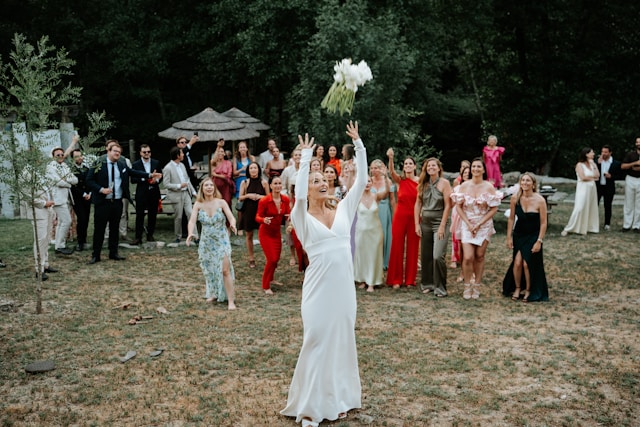
- Toss it. The traditional bouquet toss is a perfectly fine final use for your arrangement.
Your bouquet served its purpose the moment you carried it down the aisle. Everything after that is a bonus. Whether you preserve it for decades or compost it on Monday, the memory of holding it on your wedding day is what lasts.
If you are still in the planning phase and choosing your bouquet, start with our bouquet customizer to build something worth remembering — however you choose to remember it. And learn more about the quality of flowers we use on our sourcing page.